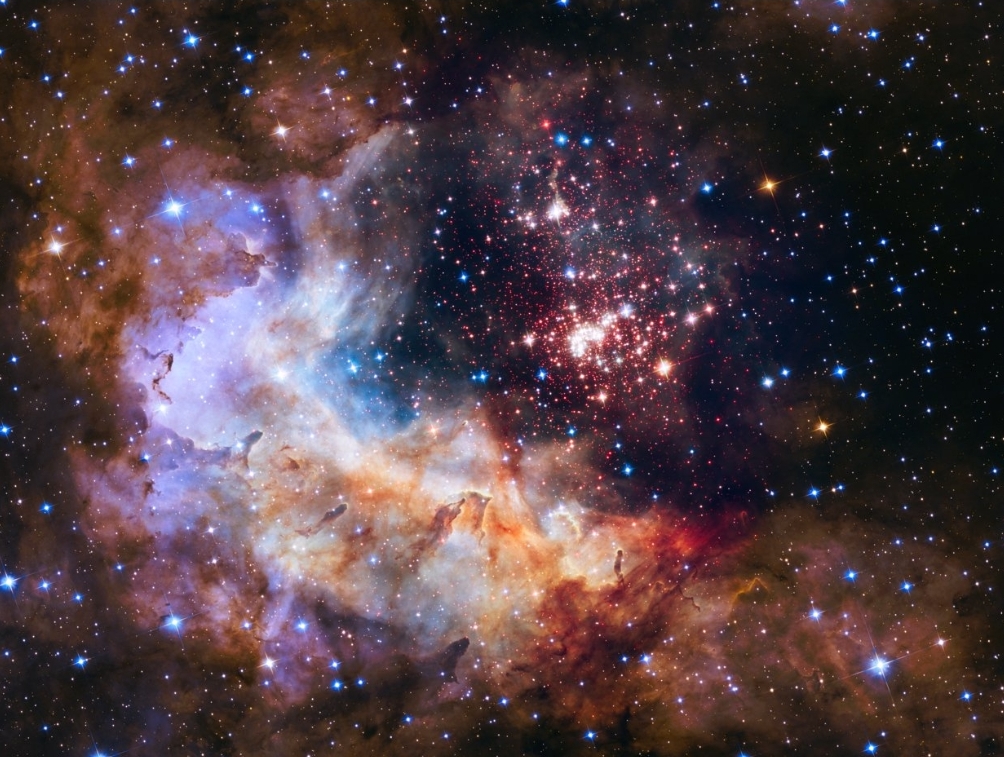
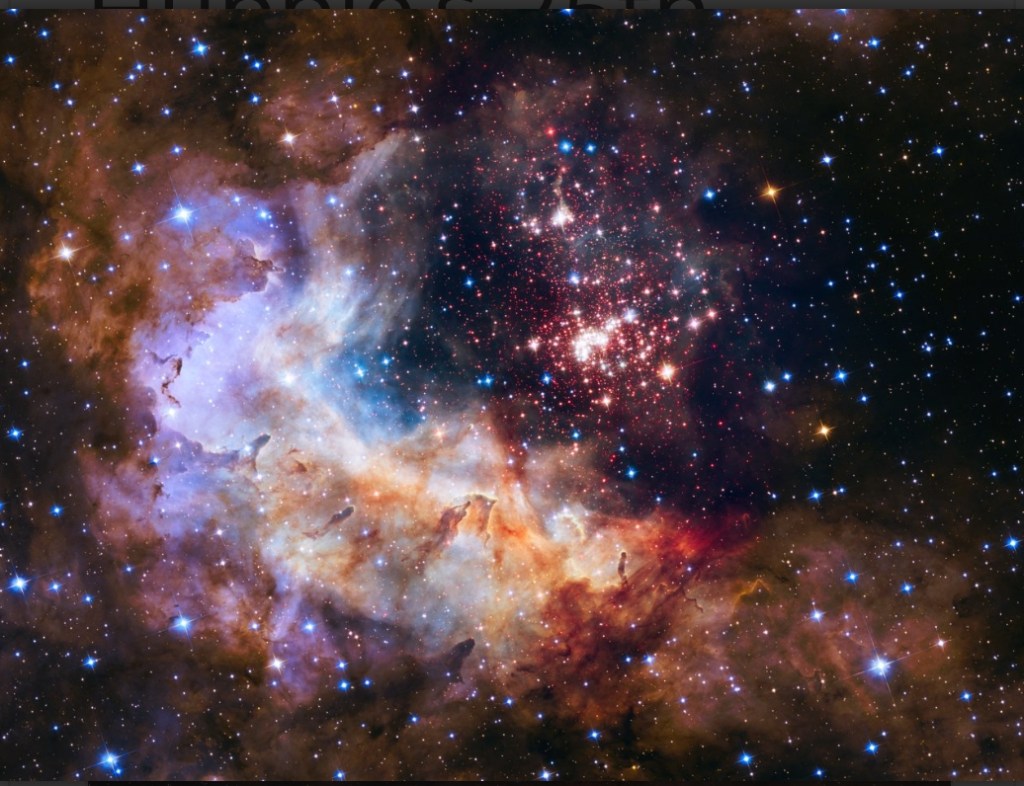
Image credits :- NASA, ESA, the Hubble Heritage Team (STScI/AURA), A. Nota (ESA/STScI), and the Westerlund 2 Science Team
Space is a very interesting subject that we don’t know a lot about during recent years we have sent a lot lot of space crafts to space, some humans and some telescopes as well. We as species has developed so far that now we have a space station circling the earth and it is often speculated to be the most expensive object the humanity has ever made ( did you knew that ) there are various organisations that should be credited for this space researches such as NASA, ISRO and many more but even after these constant efforts space still remains a big mystery to us and hopefully we will solve this mystery as we progress in time and technological advancements. Today I am gonna tell you about some amazing facts that came to know as result of our space exploration along the years, so sit tight and let this space journey begin
Let’s get this fact journey started
1. Sound cannot travel through space but if it could the earth would be covered with a sound of 100 decibels all day long
The space is a vacuum and unlike light sound needs a medium to travel the medium could be water, air or something solid while light does not need a medium to travel therfore light can travel through space and sound cannot but if sound was able to travel through there will a 100 decibel loud sound every where on earth due to the sun. Isn’t this interesting
2. The stars we see in the space is actually us looking at the past
Actually a lot of stars that we see in the space are hundreds of light years away so by the time light from them reaches us it’s already hundreds of years old so we are now looking at the state the star would would have been hundreds of years before we are able to see it not the current state
3. The largest volcano of our solar system is not on earth it’s actually on mars
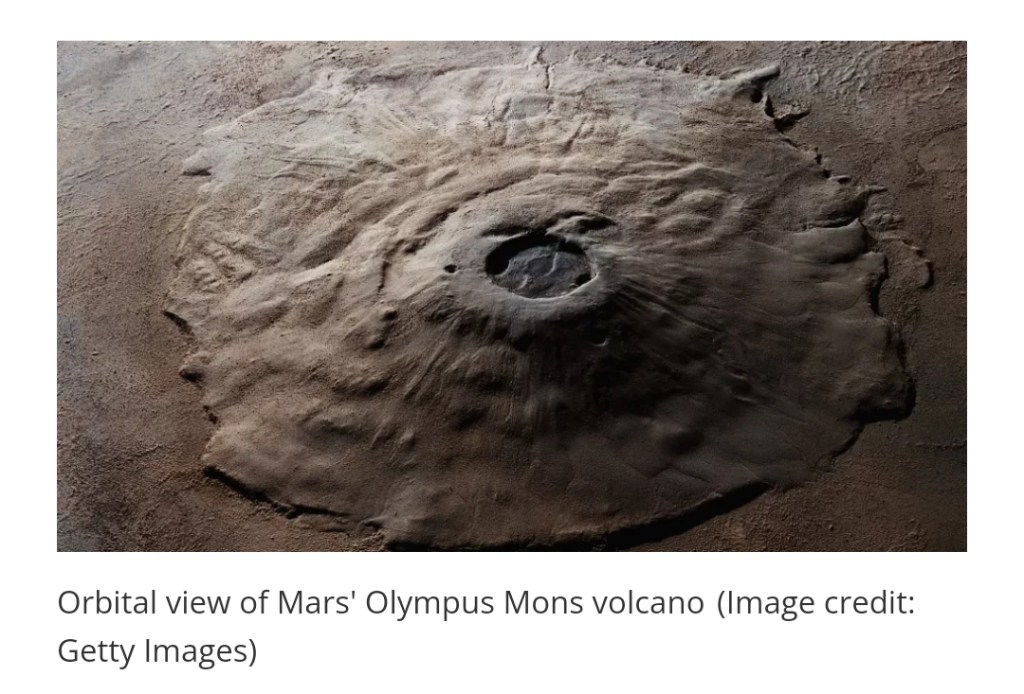
The name of that volcano is Olympus Mons and it stands at a height of about 13.6 miles (22 kilometers) high, nearly three times the height of Mount Everest which also makes it the highest mountain in our solar system
4. There are billions of stars in our galaxy Milky Way
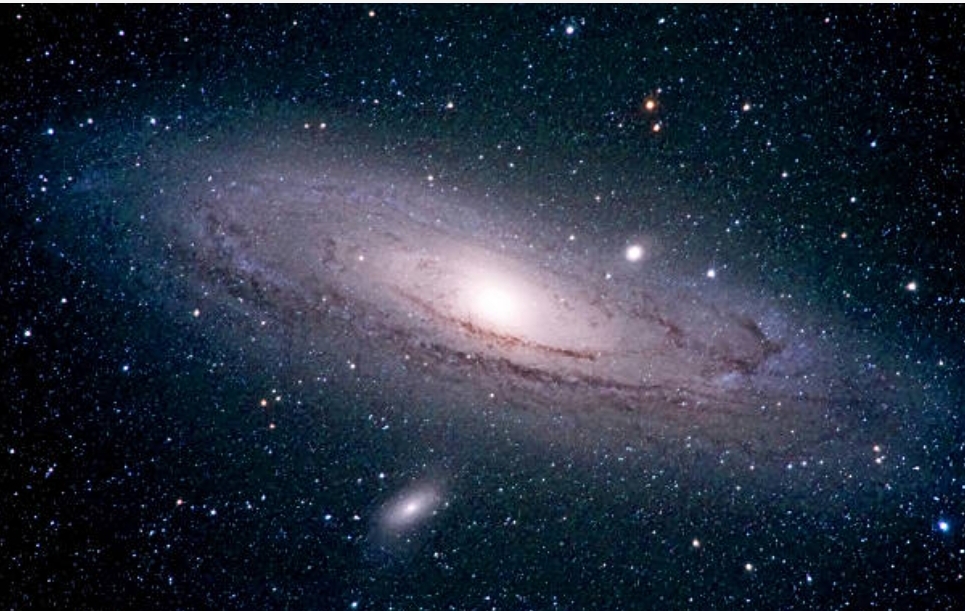
The Milky Way galaxy is estimated to contain around 100 billion stars, and it’s just one of billions of galaxies in the observable universe.
5. The temperature of the coldest place in the universe is absolute zero
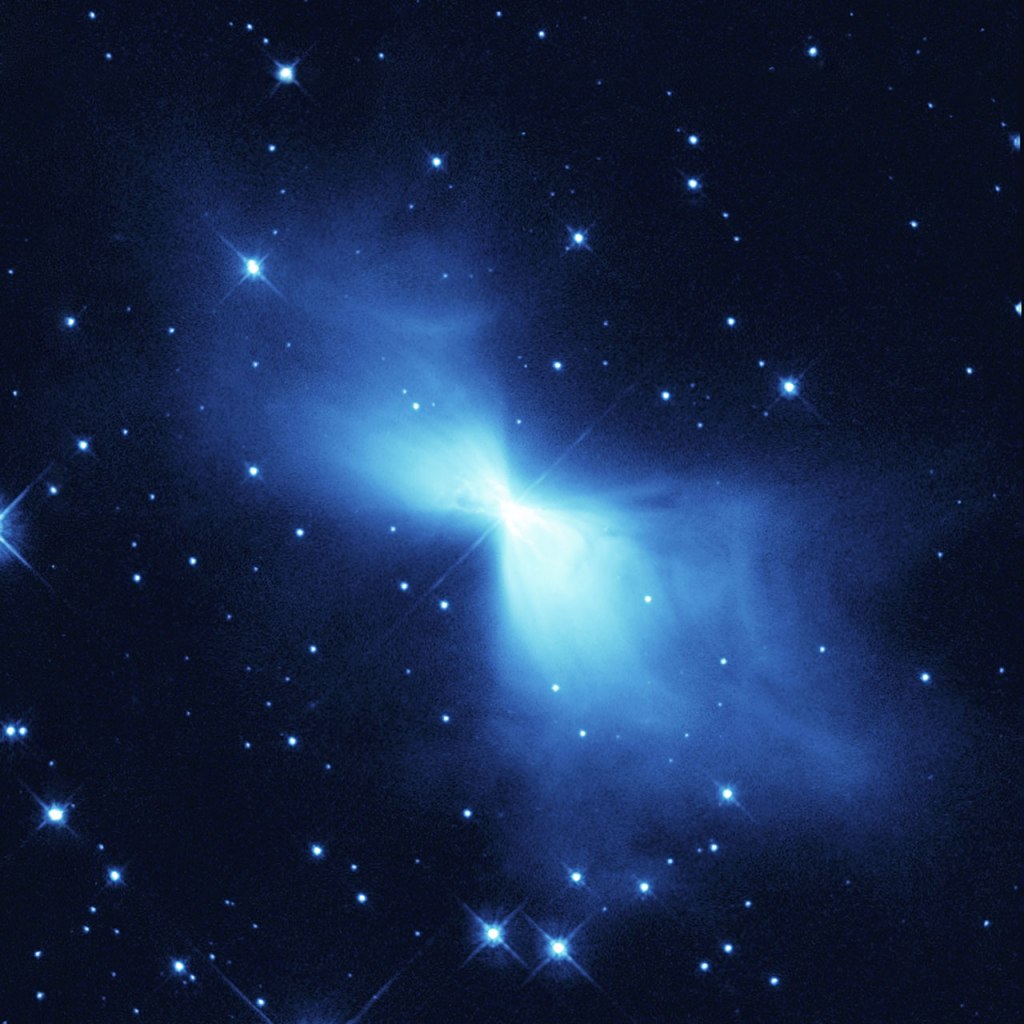
The coldest known place in the universe is the Boomerang Nebula, with a temperature of just one degree above absolute zero (-459.67°F or -273.15°C).
6. The largest known structure in the universe is Hercules-Corona Borealis Great Wall
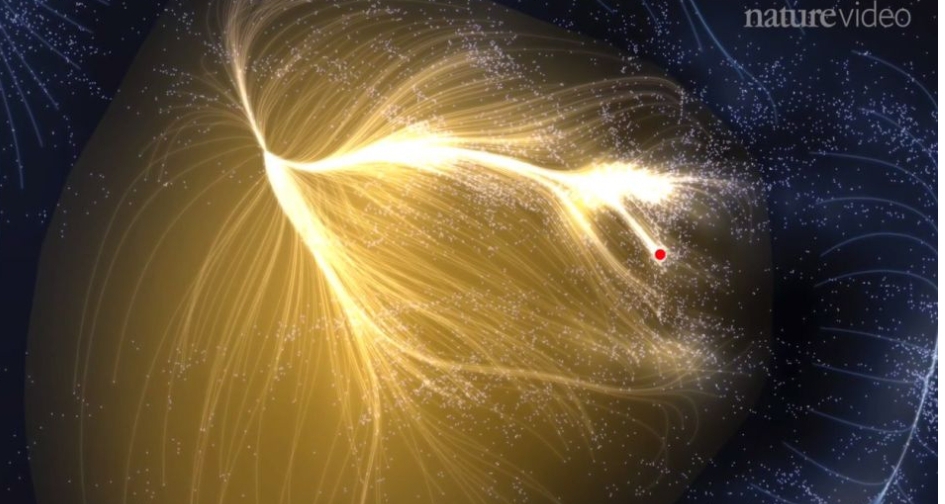
The largest known structure in the universe is the Hercules-Corona Borealis Great Wall, a massive grouping of galaxies stretching over 10 billion light-years.
7. The Voyager 1 spacecraft, launched in 1977, is the farthest human-made object from Earth and has entered interstellar space
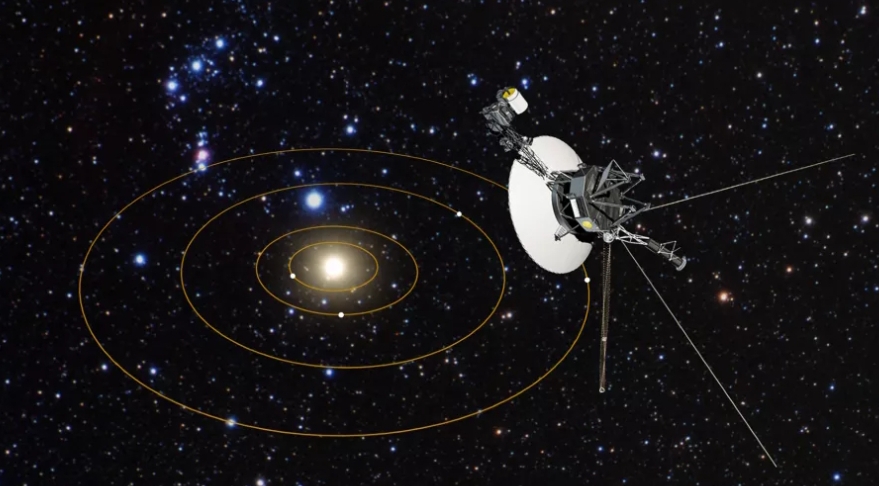
The Voyager 1 spacecraft is a robotic probe launched by NASA in 1977 as part of the Voyager program. Its primary mission was to study the outer planets of our solar system – Jupiter and Saturn – as well as their moons and rings. However, Voyager 1’s journey didn’t end there.
After completing its mission to study the outer planets, Voyager 1 continued on its trajectory away from the Sun. It passed through the outermost layer of our solar system, known as the heliosphere, which is a region dominated by the solar wind and magnetic fields generated by the Sun.
In 2012, Voyager 1 made a historic announcement: it had officially crossed the boundary of the heliosphere and entered interstellar space. Interstellar space is the vast expanse of space between stars, where the influence of our Sun’s solar wind diminishes, and the influence of the surrounding interstellar medium becomes more pronounced.
This milestone marked the first time that a human-made object had ventured beyond the boundaries of our solar system and into the space between the stars. Voyager 1 continues to communicate with Earth, sending back valuable data about its surroundings and the conditions in interstellar space.
Voyager 1’s remarkable journey has provided us with valuable insights into the dynamics of our solar system and the environment of interstellar space, helping us better understand the broader universe beyond our own planetary neighborhood.
8. The speed of light is so fast that it can travel around the Earth’s equator about 7.5 times in a single second
The speed of light is an incredibly fast and fundamental constant of nature. In a vacuum, like outer space, light travels at a constant speed of approximately 299,792,458 meters per second (about 186,282 miles per second). This means that in just one second, light can cover an astonishing amount of distance.
Imagine a hypothetical scenario where you could somehow stretch a long, invisible thread all the way around the Earth’s equator, which is the imaginary line that circles the Earth’s surface horizontally. The Earth’s equatorial circumference is about 40,075 kilometers (24,901 miles).
Now, if you were to send a beam of light racing along that stretched thread, it would complete the entire journey around the Earth’s equator approximately 7.5 times in just a single second. This illustrates just how incredibly fast light travels – it covers vast distances in the blink of an eye.
9. Some stars are so dense that a teaspoon of their material would weigh as much as a mountain on Earth.
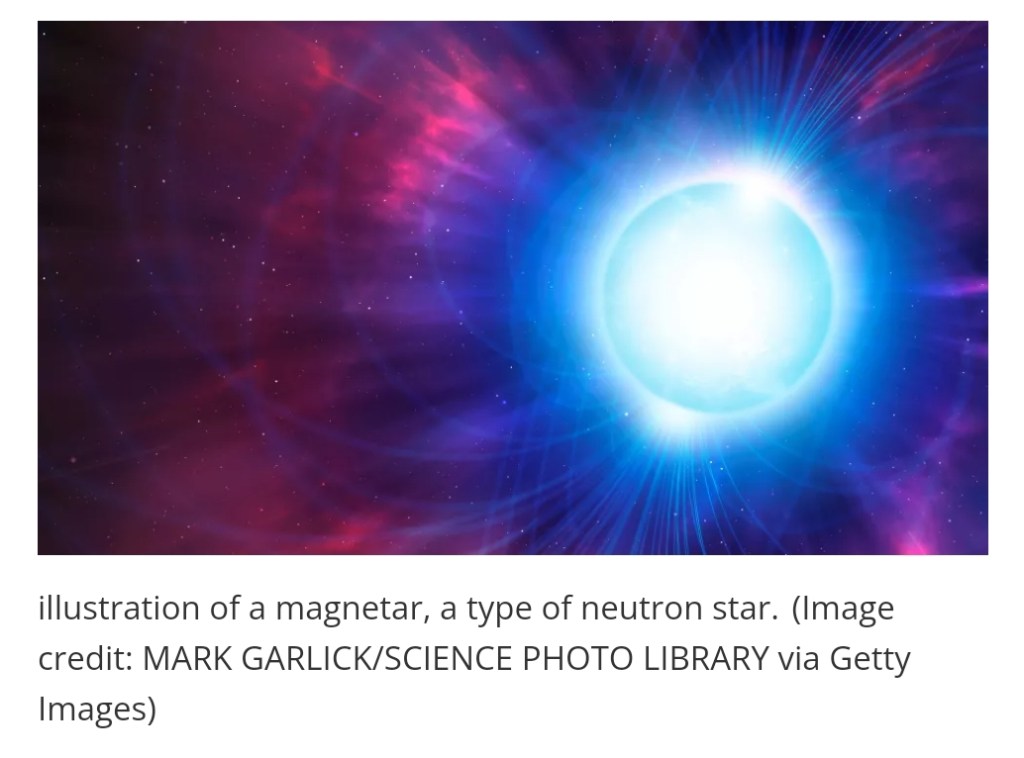
Neutron stars are the incredibly compact remnants of massive stars that have gone through a supernova explosion. During this explosion, the outer layers of the star are expelled into space, while the core collapses under its own gravity. What remains is a core composed mostly of densely packed neutrons, hence the name “neutron star.”The gravitational force on a neutron star is immense due to its incredible mass packed into a small volume. This means that a teaspoon’s worth of material from a neutron star would weigh an astronomical amount, much more than you might expect based on Earth’s familiar conditions.Imagine taking a small amount of neutron star material, just a teaspoonful, and somehow placing it on a scale. The intense gravitational force of the neutron star would cause that tiny amount of material to have an enormous weight, equivalent to that of a massive mountain here on Earth.
10. A day on Pluto is longer than its year. It takes about 248 Earth years for Pluto to orbit the Sun, but a day on Pluto is just over 6 Earth days.
Day on Pluto: A day on any celestial body refers to the time it takes for that body to complete one full rotation on its axis. For Pluto, this rotation takes about 6.39 Earth days. This means that from one sunrise to the next on Pluto, around 6.39 Earth days have passed.
Year on Pluto: A year on a planet or dwarf planet corresponds to the time it takes for that object to complete one full orbit around the Sun. In the case of Pluto, its orbit is highly elongated and takes about 248 Earth years to complete. This lengthy orbit is due to Pluto’s relatively distant and elliptical path around the Sun.
Now, here’s where it gets interesting: Pluto’s day (rotation period) is actually shorter than its year (orbital period). This means that while it takes Pluto almost 250 Earth years to complete one orbit around the Sun, it spins on its axis relatively quickly, completing a full rotation in just over 6 Earth days.
 The Fact Space